Manufacturing & Industrial Security Consulting

Your processes, tooling, and designs are your margin. Competitors and insiders can walk them out through a plant tour, a contractor badge, or an unlocked engineering office. We test how, then design the program that stops it.

Explore Solutions

What Does Manufacturing Plant Security Include?

Layered protection from the fence line to the file cabinet

Protect the Plant Like the Asset It Is

Manufacturing plant security is not one gate and a camera. It is a set of layers, each matched to the value of what sits behind it. The production floor holds your process knowledge in plain sight. Engineering and R&D areas hold what your next product will be. Drawings, specifications, and records hold everything a competitor would need to skip years of your work. A serious program treats each layer differently, and enforces every one.

Red Cell Solutions helps manufacturers design those layers through physical security consulting, then proves whether they hold through authorized adversarial testing.

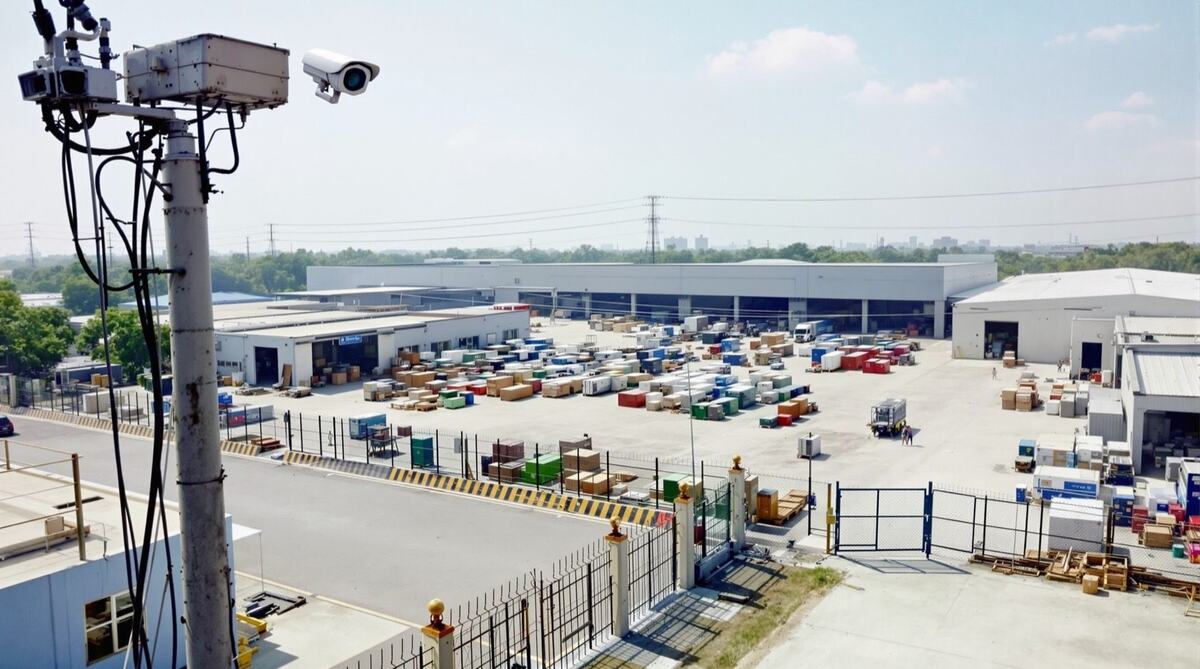
  • Perimeter and yard: Fencing and gate control, vehicle and trailer handling, exterior lighting, and surveillance of approaches, laydown areas, and parking
  • Production floor: Controlled entry for employees, contractors, and visitors, camera and phone rules where processes are visible, and clear boundaries around proprietary lines and tooling
  • R&D and engineering areas: Tighter access lists, escort requirements, and physical separation for the spaces where prototypes, test articles, and new designs live
  • Records and drawings: Handling, storage, and destruction discipline for drawings, specifications, formulas, travelers, and supplier and pricing files, on paper and on portable media
  • Supporting controls: Visitor and tour procedures, contractor management, key and badge accountability, and offboarding steps that pull access the day it should end

Employee holding a keycard to a badge reader at a controlled entry door

Where Do Manufacturing Security Controls Fail?

The everyday paths trade secrets and product take out of a plant

Contractors and Temporary Labor

Maintenance crews, machine techs, temp workers, and cleaning staff move through plants daily, often unescorted and often with access far beyond the job in front of them. A badge issued for one project keeps working months later, and nobody can say who a contractor actually sent on a given day. For a competitor, a contractor relationship is the cheapest way onto your floor.

Our Solution

We assess how contractor access is requested, scoped, escorted, and revoked, then test it: our authorized physical penetration testing uses the same contractor and vendor pretexts a real adversary would, so you learn which ones work before someone else does.

Facility Tours and Visitor Photography

Customer visits, supplier audits, and community tours walk outsiders directly past your process. A phone camera captures line layout, fixturing, cycle boards, and whiteboards in seconds, and hosts rarely enforce photo rules on a guest they are trying to impress. What a visitor sees and photographs on a friendly tour can be worth more than anything they could steal from a server.

Our Solution

We design tour routes, visitor rules, and host responsibilities that let you show the plant without showing the secret sauce, and we test whether your staff actually challenge a visitor who drifts off route or raises a camera where they should not.

Prototype and Drawing Theft

Prototypes sit on open benches, drawings lie on the floor next to the machines that need them, and engineering offices stay unlocked because locking them is inconvenient. One photographed drawing package or one pocketed test article can hand a competitor your development lead, and unlike stolen inventory, you may never notice it left.

Our Solution

We help you identify which drawings, prototypes, and process documents actually constitute your advantage, then design storage, marking, access, and clean-desk controls around them through counterintelligence program design, sized so the production floor can still do its job.

Insider Removal of Tooling, Specs, and Samples

The employee who resigns for a competitor rarely leaves empty-handed. Specifications, customer files, program code for machines, samples, and even small tooling walk out in bags, in vehicles, and on drives during the final weeks, when access is still live and attention is elsewhere. Most plants have no trigger that connects a resignation to a change in what that person can reach and carry.

Our Solution

Our insider threat programs give manufacturers practical controls: access tied to role, heightened handling around resignations and terminations, property and media discipline at exits, and reporting channels employees will actually use, all without turning the plant into a checkpoint.

Loading Docks and Shift Changes

Docks are the busiest, least questioned doors in the building. Drivers wait inside, doors stand open for airflow, and at shift change hundreds of people cross the threshold while supervision is at its thinnest. Product, samples, and tooling leave through docks; strangers come in through them, because nobody expects to recognize everyone during the rush.

Our Solution

We assess dock procedures, driver handling, seal and manifest discipline, and shift-change coverage, and our red team engagements test the dock and the rush the way an adversary would, under written rules of engagement that keep operations safe.

What Do Customers Expect From Supplier Security?

Physical security is becoming a condition of winning the contract

Your Security Posture Is Now Part of Your Bid

Major customers increasingly audit their suppliers' physical security and information handling before awarding work, and keep auditing it afterward. If your plant will hold their drawings, their tooling, or their pre-release product, they want to know who can reach it, how visitors are handled, and what happens when an employee with access leaves. A weak answer does not just embarrass you in the audit, it costs you the contract.

Supply-chain security programs point the same direction. Frameworks such as C-TPAT exist for importers precisely because cargo and facility security are now treated as shared responsibilities across the chain, and customers in many industries apply the same logic to the plants they buy from. The details vary by customer and sector; the expectation does not.

  • Documented controls: Written procedures for access, visitors, contractors, and sensitive information handling that match what actually happens on your floor
  • Evidence they work: Access records, visitor logs, and offboarding checklists a customer auditor can review without finding daylight between paper and practice
  • Protection of customer property: Demonstrable segregation and handling controls for customer-owned drawings, tooling, and product in your custody
  • Independent validation: An outside assessment carries weight with customers that a self-review never will

An independent security audit before your customer's audit lets you find and fix the gaps on your own schedule, and gives you documentation to put on the table when the questionnaire arrives.

Hand presenting a proximity access card to a wall-mounted badge reader

How Does Red Cell Solutions Secure Manufacturers?

We test, then we plan: adversarial validation feeding program design

Find Out How It Would Happen, Then Make Sure It Can't

We work both sides of the problem. First we test: authorized exercises show exactly how a competitor, a contractor, or a departing employee would reach your processes, prototypes, and records. Then we plan: we design the program that closes what the testing found, so every recommendation traces to a demonstrated weakness rather than a guess. We are consultants only, with no hardware, guards, or monitoring to sell, so the findings answer to you and no one else.

  • Security Audits: Layer-by-layer assessment from the fence line to the drawing cabinet, benchmarked against what your customers' auditors will look for
  • Physical Penetration Testing: Controlled attempts to reach the floor, the engineering office, and the dock using the pretexts real adversaries use, documented with evidence and remediation guidance
  • Red Team Engagements: Extended exercises combining physical intrusion and social engineering against a defined scope, run under rules of engagement that protect production
  • Insider Threat Programs: Role-based access, resignation and termination triggers, exit discipline, and reporting channels designed for a plant workforce that includes temps and contractors
  • Counterintelligence Program Design: Identification of what actually constitutes your competitive advantage, and the handling, tour, visitor, and awareness controls that keep it inside the building

Frequently Asked Questions

Common questions about manufacturing plant security

What is industrial espionage?

Industrial espionage is the theft of a company's competitive advantage: manufacturing processes, tooling designs, formulas, drawings, supplier and pricing data, and prototypes, taken by competitors or the people working for them. Unlike hacking, much of it happens physically, through facility tours, contractors with unsupervised access, employees who photograph or copy what they work on, and visitors who see more than they should. It is illegal, it is common, and most victims never learn exactly how it happened.

How do trade secrets physically leave a plant?

Trade secrets leave plants in ordinary-looking ways: a phone camera pointed at a production line during a tour, drawings copied or photographed in an unlocked engineering office, a departing employee carrying out specs and customer files in their final weeks, a contractor walking unescorted through areas far beyond their work order, and samples or tooling slipped out through a loading dock during a busy shift change. Each path looks routine at the time, which is exactly why it works.

Can you test our facility without disrupting production?

Yes. Every engagement runs under a written scope and rules of engagement agreed with you in advance. We define which areas, shifts, and methods are in bounds, exclude anything that could interfere with production equipment, safety systems, or operations, and coordinate with a small trusted group on your side so testing never endangers people, product, or uptime. The point is to observe how your controls perform under realistic pressure, not to interrupt your line.

Do you conduct investigations?

No. Red Cell Solutions is a security consulting firm, not a private investigative agency. We do not conduct investigations, surveillance of individuals, or evidence-gathering for legal proceedings. What we do is test your defenses through authorized adversarial exercises, assess your exposure, and design the security and counterintelligence program that prevents the loss from happening in the first place.

What does manufacturing plant security include?

Manufacturing plant security includes every layer between an outsider and your competitive advantage: perimeter and yard control, controlled entry to the production floor, tighter restrictions around R&D and engineering areas, and disciplined handling of drawings, specifications, samples, and records. It also covers the human side, including contractor and visitor management, tour procedures, camera and phone policies in sensitive areas, and offboarding controls for departing employees.

Find Out How Your Advantage Would Walk Out the Door

Test your plant against a real adversary before a competitor does it for free.

Schedule Consultation